Reviewed by Dr. Epstein
|
Reading time: four minutes
Most tooth extractions heal without complications. Mild discomfort, swelling, and tenderness are expected during the first few days and should gradually improve. If pain becomes worse instead of better, dry socket may be the cause.
We perform tooth extractions at our offices in Seattle and Shoreline
Table of Contents
What Should a Healing Tooth Socket Look Like?
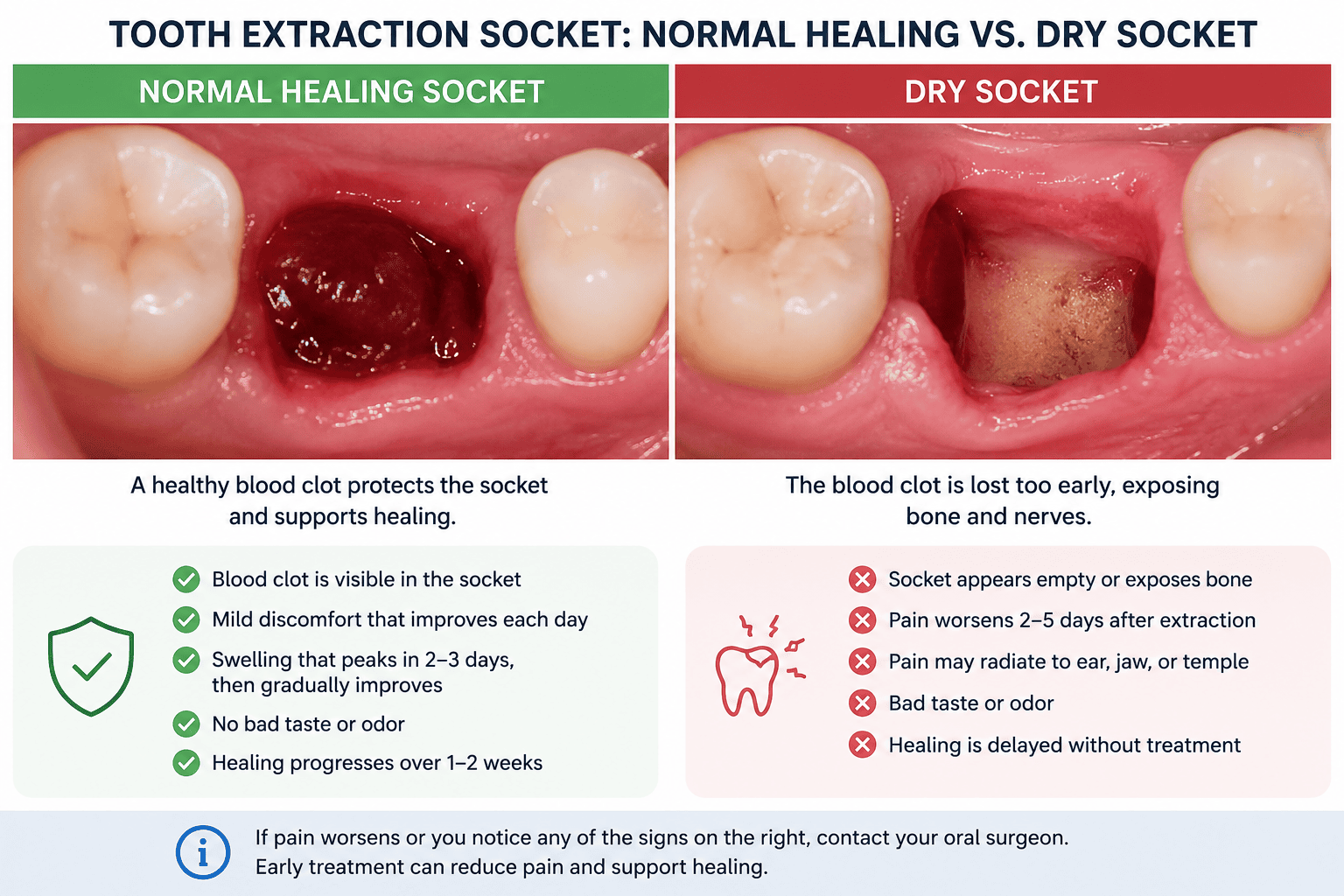
A healing tooth socket should contain a blood clot that protects the underlying bone and nerves while new tissue forms. The socket may appear dark red initially and gradually develop a white or yellowish layer as healing progresses. As healing continues, the socket will slowly fill in with new tissue and become smaller over time.
A dry socket looks different. The socket may appear empty, or you may be able to see exposed bone where the blood clot has been lost. You may also notice a bad taste or odor coming from the extraction site. We do not see this in our practice based on our techniques.
What Are the Symptoms of a Dry Socket?
Common symptoms of a dry socket include:
- Severe or worsening pain: Normal post-operative discomfort should gradually improve each day. Dry socket pain typically becomes more intense two to five days after the extraction.
- Radiating pain: The pain often extends beyond the extraction site and may affect the ear, cheek, eye, or side of the head.
- No visible blood clot: The extraction site may look empty instead of containing a dark red blood clot. In some cases, you may be able to see bone at the bottom of the socket.
- Bad taste: Exposed bone and trapped debris can create an unpleasant taste or odor.
- Delayed healing: The extraction site may not appear to be healing normally, and discomfort may persist longer than expected.
How to Prevent Dry Socket
While dry socket cannot always be prevented, following your post-operative instructions carefully can significantly reduce the risk. We no longer see this entity in our practice based on our techniques.
To help protect the blood clot and support normal healing:
- Avoid smoking and vaping during recovery
- Do not use straws for the first several days after surgery
- Avoid forceful rinsing, spitting, or vigorous swishing
- Follow your surgeon’s instructions for oral hygiene and wound care
- Eat soft foods and avoid chewing directly over the extraction site
- Attend any recommended follow-up appointments
The first few days after a tooth extraction are the most important for protecting the blood clot. Taking care of the extraction site during this time helps support normal healing and reduces the risk of complications.
What Should You Do If You Think You Have Dry Socket?
Dry socket can be very painful and may delay recovery if left untreated. If you suspect a dry socket, contact your surgeon for evaluation.
While waiting to be seen:
- Continue taking medications as directed
- Keep the area clean according to your surgeon’s instructions
- Avoid smoking and vaping
- Avoid using straws
- Avoid forceful rinsing or spitting
Precision Wisdom Tooth Removal and Recovery Support
Dr. Matthew Epstein and Dr. Tommy Kim use advanced surgical planning and modern techniques to support comfortable recovery after tooth extractions and wisdom tooth removal. In appropriate cases, platelet-rich fibrin may be used to support healing and tissue regeneration following surgery in this setting dry socket does not occur.
Patients receive detailed post-operative instructions, same-day follow-up, and ongoing support throughout the healing process. Care is focused on helping patients heal predictably while minimizing complications whenever possible.
Oral Surgeon in Seattle & Shoreline WA
If you are a patient at Green Lake Oral & Facial Surgery or JAWNT Oral Surgery and have questions about your recovery, our team is happy to help evaluate your recovery.
To book an appointment at Green Lake Oral & Facial Surgery in Seattle, WA, call (206) 641-7212. To book at JAWNT Oral Surgery in Shoreline, WA, call (206) 848-5788.
FAQ
How do I know if I have a dry socket or normal pain?
Normal extraction discomfort gradually improves each day. Dry socket pain typically becomes worse several days after the procedure and may radiate to the ear, jaw, or temple.
How long after a tooth extraction can a dry socket occur?
Most cases develop between two and five days after a tooth extraction.
Can a dry socket heal on its own?
Dry socket will eventually heal, but treatment can significantly reduce pain and improve comfort during recovery.
Is a dry socket an emergency?
Dry socket is not usually an emergency, but it should be evaluated promptly so symptoms can be managed and healing can be monitored.